Just had heart surgery? Here's what to watch for.
Heart surgery is a big deal, and it's normal to feel worried while you heal. Most people recover well. But in the first few weeks, a small number of people develop a problem called fluid around the heart. Knowing the warning signs, and having your care team watch your numbers from home, can help catch it early.
if you are caring for someone who just had heart surgery, this page is for you too. You don't need any medical background to use it. We explain each term in plain words, and we tell you exactly when to call for help.
What is fluid around the heart?
Your heart sits inside a thin sac, a little like a snug bag around it. Sometimes, especially after surgery, extra fluid can build up inside that sac. Doctors call this a pericardial effusion (say: pair-ih-CAR-dee-ul eh-FYOO-zhun).
A small amount of fluid may cause no trouble at all. But if a lot builds up, it can begin to press on the heart from the outside.
Pericardial effusion
Extra fluid building up in the thin sac around your heart.
What is cardiac tamponade, and why is it serious?
If the fluid presses on the heart so hard that the heart can't fill and pump the way it should, that is called cardiac tamponade (say: tam-pon-AYD). It is a medical emergency and needs treatment right away.
It is not common. But it is more likely after valve surgery and in people taking blood thinners. It also tends to show up later than people expect, often in the second or third week after surgery, when many people are already back home.
Cardiac tamponade
When fluid presses on the heart so hard it can't pump well. This is an emergency.
The good news: when it is caught early, it is very treatable. That is the whole reason watching for it at home matters.
Who is this for?
This guide is for anyone recovering from heart surgery, and for the family and friends helping them. It is most useful if you or your loved one:
- Had heart valve surgery, surgery on the aorta, or other open-heart surgery
- Takes a blood thinner (a medicine that helps prevent clots)
- Is in the first few weeks after going home, when fluid around the heart is most likely
If that sounds like you, the warning signs below are worth knowing. None of this replaces your care team, it just helps you know what to watch for.
Warning signs to watch for at home
After heart surgery, it's worth paying attention to these feelings. They can have many causes, but they're worth a call to your care team:
- Feeling more short of breath than you did the day before
- Feeling very tired or weak, more than expected for your recovery
- Feeling dizzy or lightheaded
- A heartbeat that feels fast or fluttery
- Swelling, or a feeling of fullness or pressure in the chest
You know your body. If something feels wrong, it is always okay to ask.
What to expect
Your recovery, week by week
Everyone heals at their own pace, and your care team knows your situation best. This is a general picture of the first month. Tap a week to see what is usually normal, and what is worth a call.
Week 1: settling in at home
Usually normal: feeling tired, some soreness at the incision, a poor appetite, and trouble sleeping. Short walks are encouraged.
Worth a call: a fever, redness or drainage from the incision, or feeling more short of breath than the day before.
What is PulSentry watching for?
When the heart is under this kind of pressure, your pulse can drop more than normal each time you breathe in. Doctors call this pulsus paradoxus, and they treat it as a warning sign. You usually can't feel it yourself, it takes a measurement to notice.
PulSentry is software that watches the very same pulse signal your fingertip oxygen clip already makes, looking for that breathing-related pattern. Think of it like a smoke detector for one specific warning sign in your pulse. It watches and alerts your care team.
PulSentry does not diagnose or treat anything, and it does not replace your doctor. It simply helps your care team notice one early sign sooner.
See it for yourself
How breathing changes your pulse
Watch the pulse trace below. As you breathe, the height of each beat rises and falls a little. When the heart is under pressure, that rise and fall gets much bigger. Tap the buttons to see the difference.
Do I need any new equipment?
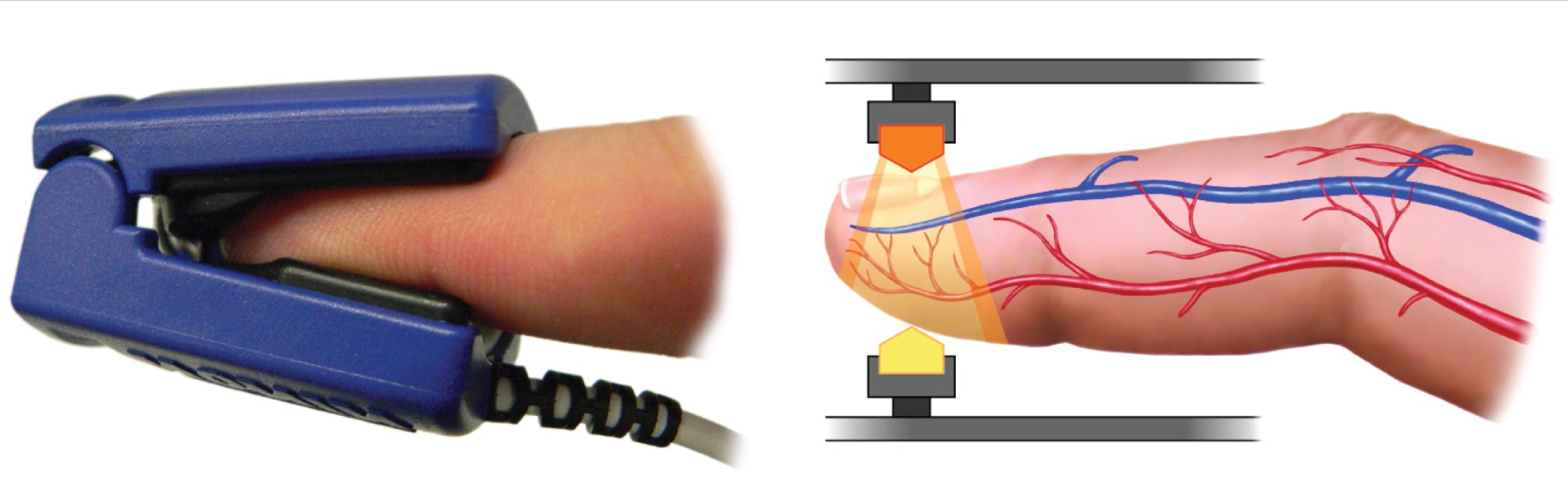
No. PulSentry uses a standard fingertip pulse oximeter, the same kind of clip already used in clinics and hospitals. There is no new device to buy and no new sensor to wear.
Pulse oximeter
The little clip that goes on your fingertip to check your pulse and oxygen. You've likely seen one before.
How does monitoring at home work?
Here's the simple version of what monitoring at home looks like:
- You wear the clip as directed Your care team tells you when and how often to use the fingertip oximeter at home.
- The software watches the pulse signal PulSentry looks at the pulse pattern for the breathing-related warning sign.
- Your care team gets the readings If something looks off, the team is alerted so they can check on you.
- Your doctor decides what's next Any decision about your care is always made by your care team, not by the software.
Remote patient monitoring
Your care team keeps an eye on readings from your home, so a problem can be spotted between visits.
Is this approved by the FDA?
Not yet. PulSentry is still being studied. It is investigational, which means it has not been cleared by the FDA. It is meant to support your care team, never to replace them or your own judgment about how you feel. Always follow the guidance of your own doctors and nurses.
Will Medicare or insurance cover it?
Monitoring your health from home, often called remote patient monitoring, is something Medicare and many insurance plans already help pay for in certain situations. Whether it applies to you depends on your plan and your doctor's recommendation.
The best step is simple: ask your care team whether home monitoring is right for your recovery, and what your plan covers. This page is for information only and is not financial or insurance advice.
What happens if they find fluid?
Finding fluid early is good news, because it means there is time to plan. What happens next depends on how much fluid there is and how you feel. Often it is one of these:
- Watch and recheck. A small amount of fluid may just be watched with repeat scans, and it may go away on its own.
- Medicine. Sometimes medicine is used to help with the fluid or its cause.
- Drainage. If the fluid is larger or pressing on the heart, the team may drain it. Caught early, this is usually a planned, calm procedure rather than an emergency.
early gives you choices. Late takes them away. That is the whole reason for watching closely in the first few weeks.
What is draining the fluid like?
If fluid needs to come out, the most common way is a procedure called pericardiocentesis. In plain terms, a doctor uses a thin tube to draw the fluid out from around the heart, usually with numbing medicine and live imaging to guide it. Many people feel better quickly once the pressure is relieved.
Pericardiocentesis
A procedure that uses a thin tube to drain fluid from the sac around the heart, guided by imaging.
Your care team will explain the exact plan for your situation, including any risks and what to expect afterward. It is always okay to ask them to walk you through it step by step.
Be prepared
Questions to ask your care team
It is easy to forget questions in the moment. Tap the ones you want to remember, then print or screenshot your list to bring to your next visit or call.
For the person helping (caregivers)
If you are caring for someone after heart surgery, you are part of the team. You often notice changes before anyone else does. A few simple things help most:
- Know the warning signs above, and trust them. If something seems off, it is okay to call.
- Keep the phone numbers handy for the care team and the after-hours line.
- Help with the daily rhythm, like short walks, medicines on time, and rest.
- Watch for breathing changes, new tiredness, dizziness, or a racing heartbeat, and mention them.
You do not need to be a nurse. Noticing and calling is enough.
How you might feel, and what is normal
Recovery is not just physical. Many people feel up and down for a while after heart surgery, and that is common. Some tiredness, low mood, or worry can be a normal part of healing.
healing takes time. Lean on the people around you, and tell your care team if low mood, anxiety, or sleep problems are not getting better. They can help, and asking is a sign of strength.
Quick helper
Not sure who to call?
Tap what you are feeling and we will point you to the right next step. This is general information, not medical advice, and it never replaces your care team. When in doubt, call.
When should I call my doctor or 911?
Call 911 or go to the emergency room right away if you have:
- Severe shortness of breath
- Fainting, or feeling like you might pass out
- Chest pressure or chest pain
Call your care team if you feel more short of breath than usual, very tired, dizzy, or your heartbeat feels fast or fluttery. When in doubt, reach out. It is always okay to ask.
More plain-language guides
Want something for the fridge? Print the one-page guide.
Where this information comes from
- Mayo Clinic. Cardiac tamponade and pericardial effusion, patient information.
- MedlinePlus (U.S. National Library of Medicine). Pericardial effusion; pulse oximetry.
- Floerchinger B, et al. Delayed cardiac tamponade after open heart surgery. Journal of Cardiothoracic Surgery. 2013;8:158.
- For clinicians: Why echocardiography misses post-surgical tamponade.
Related plain-language guides: What is pulsus paradoxus?, Recovering at home after heart surgery, and Shortness of breath and the pulse oximeter.
¿Habla español? Lea esta guía en español.